Sunday, July 15, 2012

Tex-Mex And Peas: Peas Part 2


Fig.1. The peas add another flavor dimension to the tacos. I like sour cream, chopped green onions and Frank's Red Hot on my tacos. I got the Frank's 'Think' Red Hot in my publi-sac, I put that shit on everything.

I really don't want this post to sound like I'm trying to 'trick' your kids into eating something nutritious. I never agreed with that approach. Kids, from a very young age, need to know exactly what they're eating: be it broccoli, rapini, zucchini, tomatoes, Brussel sprouts or peas; tell your kids what vegetables and fruits they're eating. Give them young ones enough credit, they will like their vegetables. Don't buy into the pre-disposed assumption that 'kids hate vegetables'. That's just the product of television and city-urban legends. News-Flash: children who live on farms eat their vegetables.
That being said, adding peas to tacos works; like I mentioned in my previous post, the peas add another flavor dimension to the dish, and if the peas are deep enough in the taco, your kids won't be able to pick them pesky peas out.

Hard Shell Tacos With Peas
Serves 4 (2 tacos each)

Ingredients:
3 tbsp olive oil
1 large onion, diced
1 kilo lean minced meat
1 cup fresh peas
3 smoked chilpotle peppers in adobe sauce, chopped (I make my own, but I also like to use San Marcos, see picture below)
1 small can, or 1 cup pureed tomatoes
Tex Mex spices, add to your tastes (I like my pre-made blends at Spice Station or Olives et Epices.)

Direction:

Heat the olive oil in a large pan set over medium heat. Add the onions and saute until translucent, 8 to 10 minutes.  Add the meat and cook until no longer pink, make sure you break up the meat well. Add the peas, chilpotle peppers, pureed tomatoes, and spices and cook until it all comes together, 5 minutes.

Serve the meat in warmed shells (or soft tortillas if hard shells aren't your thing) and garnish with whatever you like.

Fig.2. These peppers are awesome.  I use them in all my Tex-Mex recipes, in my ribs, and in various other BBQ applications.


Thursday, July 12, 2012

Let The Pea-A-Thon Begin


 Fig.1.A bushel of fresh peas. It's a good thing.

Things come to life when the markets begin to sell berries, fruits and vegetables and I ain't talking about the food. At the risk of sounding overly sentimental, what comes alive is something in me that's been dead all winter: the colors, sights, sounds and flavours spark that culinay flame, and nothing awakens an appetite like fresh peas.

Peas are nothing short of a miracle.  How fauna has evolved to the point where little edible peas are protected by a pod calls into question the existence of a higher power.  For everyone out there who has only ever seen peas either frozen in a bag, or in a can with a Green Giant on the packaging, you owe it to yourself to get out to a farmer's market and gaze upon the splendor that is a fresh pea.
I bought a large bushel from the Birri Brothers with the intention of snacking on and cooking with peas all week, I'll be buying another couple of bushels which I'll be freezing.

Fig.2. A large bowl of shucked fresh peas, a perfect raw snack food.

Peas are one of those versatile ingredients that can be added to almost anything. This recipe is the first of a four part 'pea-a-thon'.  It's a simple way to use peas and an example that peas can add a different flavour to any dish.

Sea Snail and Pea Ceviche
I buy my sea snails (they're called borgot in French) at Atkins & Freres in the Jean Talon Market. Their 'borgot' come two ways: bottled in Mason Jars in a brine vinigar solution, and a variety just soaking in brine.  These sea snails are cooked so it's technically not a ceviche, but feel free to use fresh raw scallops or raw sole if you can't find sea snails. Like all ceviches, the viniger will 'cook' the seafood.

Fig.3. Sea snails from Quebec, or borgots in French


Ingredients:

8 to 10 Sea snails, sliced
1/3 cup fresh raw peas
1 small shallot, finely diced
red wine viniger

Directions:

Put all of the ingredients in a dish, mix and serve.

Monday, July 9, 2012

Garlic in The Blood


My Great Grandmother, Nonna Pina, believed that garlic was good for the blood.  If me or one of my cousins became sick, she'd load us up with garlic.  Till this day, when I feel a cold coming on, I head straight to Marathon and load up on tzatiki.  Who wants a kiss?
Nonna Pina was on to something. Garlic has been proven in helping people with high blood pressure and also helps boost the immune system.
Fresh Garlic, garlic leaves, and garlic shoots are now in abundance at any farmer's market. Forgo the dried garlic for a few weeks and use the fresh stuff.  I like to puree some garlic and freeze it, when I need to make a soffrito of any kind, I throw some in the pan.

Pureeing and Freeing Fresh Garlic.


Chop the garlic in small pieces and simply puree using a hand blender or a regular blender.  Place mashed garlic in ice cube trays and freeze. Once frozen, pop them out and store in a freezer bag. When needed, simply dd the frozen garlic cubes into a hot pan with oil or butter. The garlic will keep for 3 to 4 months.


Wednesday, June 20, 2012

Euro-Soccer and Euro-Food


Photos by Adriano Ciampoli
Fig.1. Inferno, on the corner of Dante and St-Dominic, is serving Sunday Lunch whenever Italy plays. I was there during the first match against Spain (we tied). Food was spectacular as always. Cafe San Simeon next door is serving sausage panini, and coffee of course.

There's no shortage of things to do in Montreal during the summer.  Festivals and sidewalk sales abound, and there's streetfood everywhere. (the only time The City of Montreal, or, as us second gen-Italians like to refer to them, The Ville, allows streetfood in the city is during festivals or closed-street sidewalk sales.)
Another type of street party is going down this week in Little Italy and it's all centered around the Eurocup.  Whether you're an Italian supporter or not, I strongly suggest you come down to Little Italy and take in the match between Italy and England this Sunday, June 24. (The game is on Saint Jean Baptiste Day, if you come with an Italian flag, you might want to bring a fleur de lis just to be safe.)


Photos by Adriano Ciampoli
Fig.2. Note the TV on the bar. You should also know that you're allowed to yell at the television.

I took the first game Italy played (against Spain) at Inferno, they set up a wide screen television on the bar and everyone in the restaurant watched the game while eating and drinking beer. The pasta with eggplant and fresh basil tasted good enough to distract me from the game, if only for a minute. Also a serious distraction was Eatalian Girl's Hamburger, which was tender, meaty, and oh so juicy.
Next door at Cafe San Simeon, the chairs are all lined in a row in front of the television and Tony, Piero and the rest of the gang are making sausage panini on the bbq. If you're not into soccer, you should come anyways just to have a sausage and eggplant sangwich. Eat it outside and it turns into streetfood.
Forza Italia!


Restaurante Inferno:  6850 Rue Saint Dominique  Montreal, QC H2S 1J7
(514) 274-0666
Cafe San Simeon: 39 Rue Dante

Friday, May 18, 2012

We All Want To Change The World: One Veg at a Time


This Saturday, May 19th is Food Revolution Day, a day in which Jamie Oliver wants us all to reflect and examine the foods we eat.  (To read more about it, click here.)  There are quite a few events marking Food Revolution Day in the city; Bon Appetite Books is making boxed lunches today and having a good old bake sale tomorrow. Also, a ‘Food’ indoor market will take place in Espace Reunion which will see a number of chefs and food producers displaying ‘Real Food’.
It’s a noble cause in which Jamie Oliver and his foundation are looking to raise money to help feed school kids in a proper and healthy manner.  If you can’t make it to any of the events, donate if you can.
It's Spring and produce beigins to grow, so let’s begin the year, in the spirit of Food Revolution Day, by respecting our fruits and vegetables; go to a market (both The Jean Talon Market and The Atwater Market are in full swing) pick up some local Quebec asparagus, and bite into it raw. Buy some fresh herbs or lettuce and plant something; get your hands dirty!  It’s time to make a connection with what makes us healthy.


Friday, April 27, 2012

Cioppino: A San Fransisco Treat

Fig.1. Seafood soup from San Fransisco

I don’t often take requests, but my biggest American fan long ago asked me for a recipe for cioppino and it’s time I oblige.  
Cioppino is a seafood soup from San Francisco, the Italian association comes mainly from two Italian dishes: Cacciocco and Burrida. Cacciucco is a Tuscan fish stew that originated in Livorno.  Ingredients varied as it was based on the catch of the day, usually, the smaller and less meaty fish and mollusks went into the stew, the larger specimens fetched the most money and therefore were sold.  Burrida, also from Liguria, incorporates vegetables in the stew and is usually cooked for much longer, there are many recipes all depending on which coastal town you’re in.
Many food historians assert that old world dishes such as cacciocco or burrida directly influenced New World dishes like Cioppino. Italian and Portuguese immigrants who fished the waters of San Francisco combined tradition and environment and created something truly American owing to the American seafood.  You can find similar dishes in coastal towns and cities all over the world that have, or have not been influenced by one another. (there's a point or conclusion to the notion of 'food connections' I'm trying to figure out, haven't figured it out yet. Keep you posted.)

Cioppino
Serves 4

This is a very simple soup to prepare.  You can use whatever seafood or fish you like, and you can add as much seafood as you like, as long as you add enough stock and tomato puree to just cover the seafood.  And always add the shrimp last, they only need a couple of minutes to cook, as soon as the shrimp turn pink, they’re done.  Make sure you include at least two crustaceans with shells on: crab, lobster, mussels or clams are perfect, the shells and the sea water in them add tremendous flavor.

Ingredients:

4 garlic cloves, whole
1 large onion, finely diced
1 cup celery, diced
1 cup white wine
15 to 18 mussels, cleaned and beards removed
8 to 12 medium size clams with shells
8 to 12 large scallops
1 cup cod pieces, chopped in 1” squares
8 to 12 medium size raw shrimp, (shells removed but tails on)
2 cans cherry tomatoes
1 cup fresh chopped Italian parsley
chicken stock, as needed enough to cover
2 bay leaves
 S&P

Fig.2. The shells add flavour.

Directions:

Add 4 tablespoons of olive oil to a large pot set over medium heat.  Add the garlic onion and celery and sauté until translucent, about 8 to 10 minutes. Add the wine, the mussels, and the clams and cover pot with lid.  Keep the lid on and cook for about 8 to 10 minutes (shake the pot around once and a while just to move the mollusks around.) Remove lid and simmer uncovered for another 2 minutes.  Add the crushed tomatoes and the stock and bring to a simmer.  Once simmering, add the scallops and cod cubes, and cook for 2 to 3 minutes, add the shrimp, parsley and season with salt and pepper and continue to simmer.  As soon as the shrimp turn pink (about 1 to 2 minutes depending on the size of the shrimp), remove from heat and serve immediately. 

Saturday, March 17, 2012

Liver Tastes Better With Tajarin


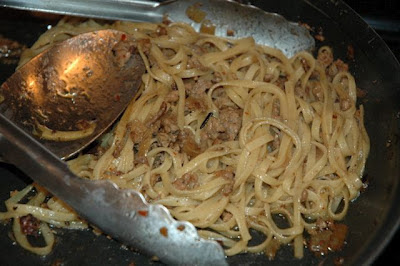
Fig.1. Tagliatelli with liver, veal and rosemary. A very Northern Italian dish.  Liver never tasted so good.

One of the best pasta dishes I’ve ever sampled happened in the City of Alba. Alba is located in The Piedmonte region of Northern Italy.  A region well known for wines, such as Barrolo and Asti, cheeses such as Robiola and Gorgonzola, and as being the birthplace of Nutella.  But the region of Piedmonte is also home to ‘Tajarin’.
Tajarin is simply the Langhe dialect for tagliatelli; but the tagliatelli in this region differ slightly than the rest of Italy because of two things: size and color.  Tajarin are traditionally cut with a knife and a little smaller in width than tagliatelli, they are also only made with egg yolks thus giving the dough a very distinct amber color; a tint which only the deep, orange egg yolks of Italy can inflict.
In Northern Italy, Tajarin is often served with a simple sauce of olive oil and shaved white truffles, but I once was served Tajarin with a liver and veal sauce, and it turned out to be a dish that has become embedded in my hippocampus. 

Fig.2. Next day's lunch.

Tajarin Con Fegato, Vitello e Rosemarino
Tajarin With Liver, Veal and Rosemary
Serves 4
I know most packages of Italian 00 flour says that it’s flour better suited for pastries and cakes, but trust me, most cooks in Northern Italy use it to make their pasta, according to them 00 flour in their pasta results in a more tender noodle.

Ingredients:
250 Grams Tajarin or Tagliatelli (available in most Italian specialty shops. You can also use linguine or any pasta for that matter.)
3 tbsp good olive oil
5 tbsp butter
1 large onion, finely diced
4 sprigs of rosemary, chopped
250g ground veal
6 to 7 chicken livers, chopped fine
1 cup white wine
3 to 4 cups chicken or beef stock
Salt and Pepper

Directions:
Add the olive oil and butter to a large pan set over medium heat.  Once hot, add the onions and rosemary and cook slowly until onions are translucent, about 12 to 15 minutes.  Add the veal and liver stirring often to ensure that the meat breaks apart into fine pieces.  Cook until meat is cooked through, 10 to 12 minutes.  Turn your heat to high and add the wine.  Cook until wine completely evaporates, turn the heat back to medium and add 2 cups of broth.  Bring to a simmer and cook until broth completely evaporates.  Once the broth evaporates, add the remaining broth, simmer, and using a wooden spoon, scrape any fond that forms on the bottom of the pan until broth is reduced by half.  Season with salt and pepper if desired and serve with some freshly grated parmesan.

Note: This is a slow dish inspired by Eugenia De Marchi, aka: Nonna Gennia.  The complete evaporation concentrates the flavor because the salts and sugars in the wine and broth become a fond which sticks to the bottom of the pan.  The last addition of broth, and a good scraping at the bottom of the pan with a wooden spoon, releases all the flavor back into the sauce.