Tuesday, March 8, 2011

Zeppole di San Giuseppe-Fry Them And They Will Come

(This is a tag-team article. After reading this article, click on the link provided below and read food writer, Marcella DeVincenzo’s take on Zeppole in Montreal.)

Fig.1. Zeppole di San Giuseppe: fried dough and cream. Simple and good.


The history behind zeppole di San Giuseppe isn’t well documented. Some historians speculate it derives from around 500AD during an annual festival held in mid-March when the Romans would honor their wine god, Bacchus, and their wheat god, Silinus, by consuming copious amounts of wine and fried dough. St Joseph’s day, a patronage still celebrated in Italy today amid large feasts and celebrations, also takes place in mid-March, March 19th to be exact; somewhere along the course of history, Silinus and St Joseph were bestowed with a zeppole.
Many also believe that St Joseph is the patron saint of pastry chefs, this is wrong, at least according to the Vatican. St Joseph is actually the patron saint of confectioners; St Honoré is in charge of pastries and the people who make them. All of you pastry chefs with a charm of St Joseph around your neck, don’t blame me, take it up with Benedict, or, start making confections.
One thing seems for certain, the modern day zeppole originated in the south—probably Naples, but many Sicilians would disagree. In Sicily, the zeppole is often referred to as a sfinzi. Pre-1950 zeppole recipes usually contained yeast, and had mashed potatoes, flour and semolina as the main ingredients. The zeppole were finished with a roll in sugar or a drizzle of honey; the creamy fillings came later.
Regarding the etymology of the name and some historical background, food historian Clifford A. Wright, author of, A Mediterranean Feast, had this to say:

The medieval Arab zalābiyya, a kind of deep-fried
doughnut sprinkled with sugar, exists today, both
with that name and many others, including sifanj.
Sifanj, coming from the Arabic word for “sponge,”
[..]This sifanj exists in Sicily, too, where it is called
sfinci (or sfìncia) the word also derived from the
Arabic.
East and North End Bakeries

The original idea for this post was to find a zeppole in Montreal similar to the one's being made in Italy at present. Zeppole, of course, as with all Italian fare, change depending on the region of Italy you’re in; there is one constant in Italy however: the zeppole are usually fresh. (Day old zeppole are sold as such and at a reduced price.) Italian bakeries in Montreal all sell zeppoles this time of year. I did a zeppole run of the usual bakeries in the East End; what I hoped to find were fresh, fried pieces of dough, just out of the fryer and piped with a fresh cream, what I found rather, were substandard, precooked pastries, void of love. To the vast majority of Italian bakeries in Montreal I say this: Fry them fresh and they will come. (and while you’re looking at the zeppole, you might want to do something about your bread too.)
So while there isn't much going on in the way of edible zeppole in the East and North End of Montreal, can Little Italy provide us with zeppole good enough for St. Joseph to bless? Find out what Marcella DeVincenzo, aka. EatalianGirl, has to say in the continuation of this zeppole reportage on http://www.eataliangirl.com/?p=326

Zeppole Di San Giuseppe

Makes 8 to 9 zeppole


Fig.2. Topped with last year's blueberry jam.

This recipe comes straight from Italy. Nothing complicated here: a fried piece of dough filled with cream. All I ask is that you eat it the same day you make it. Day old zeppole can be reheated in an oven.
When deep-frying anything, be careful. Have a lid to cover the pot of oil near you at all times (should the oil catch on fire, just put the lid on it.) and a small kitchen fire extinguisher is also a good idea. This is a perfect recipe for a deep-fryer.

For the dough:

250 ml (or 1 cup+2tbsp) water
70 grams unsalted butter
1 tbsp vanilla extract
150 grams (or 1 cup) 00flour
40 grams (or 3 tbsp) sugar
1/4 tsp salt
zest of 1 lemon
3 eggs

For the filling:

1 cup ricotta
1/4 cup maple syrup
zest of 1/2 a lemon


Directions:

In a medium heavy-bottom pot, bring the water, butter and vanilla extract to a simmer. Once the liquid is simmering, and all of the butter completely melted, add the flour, all at once to the simmering liquid and stir (using a wooden spoon) until you have a unified ball of dough. Turn the heat to low and continue stirring the ball around for 2 minutes to cook off some of the moisture in the dough. Transfer the ball of dough into a large bowl, spread it out a little and let it cool down (Don’t let it get too cold, it should be warm, but not hot, for the next step) Add the sugar, salt and lemon zest and stir. Add the eggs one at a time, adding the next egg only after the first is completely incorporated. (You can use a stand mixer for this step. Also, when the egg is added, your dough will at first look like it separated into pieces, this is normal. Keep mixing vigorously and the batter will come back together.) Scoop the batter into a piping bag and set aside.
Cut nine, 4”x4” squares of parchment paper. Place the paper squares on a cookie sheet, make sure they are flat, (it’s important that the paper not move while you’re piping) I like to dab the bottom of the parchment with corn syrup so it sticks to the cookie sheet. Starting in the center of the paper, pipe the batter in a circular motion with every new circle resting just outside the other (see picture fig) For the last circle, pipe on top of the outer circle, forming a border. (If you wish to keep things simple, you can just pipe the batter to form a ring, like a doughnut.)
Pour three inches of oil in a deep pan or pot. Heat the oil to a temperature between 325 degrees F to 335 degrees F. (You really need an oil thermometer for this.) Slide the zeppole into the hot oil with the parchment paper and fry zeppole, about 8 minutes on one side and 6 to 7 minutes on the other. (Do not fry more than two zeppole at a time and you can remove the parchment paper a couple of minutes after it's placed in the oil. Don't worry, the paper won't burn.) It's important that the zeppole be completely covered in oil for several minutes so that the center (or hole) of the zeppole cooks through. Once the zeppole are a deep, golden brown, transfer to a cookie sheet lined with paper towels to cool.
To prepare the filling, simply whip (it's best to use a mixer for this) 1 cup of ricotta with 1/4 cup maple syrup, and the lemon zest. (I used maple syrup and a blueberry topping in an effort to keep things local and in season, feel free to add sugar to the ricotta if you wish. How much to add is up to you.) Whip on medium speed for about 5 to 6 minutes, until very creamy. Pipe (or spoon) the ricotta into the zeppole, top with whatever you want (Stay away from the red maraschino cherries, the sulfur dioxide they are brined in will kill you. In Italy, zeppole are usually topped with black sour cherries. If you made a jam last fall, use that.)

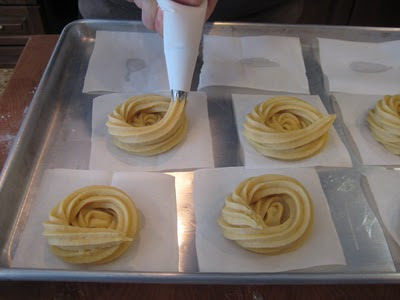
Fig.3. Start piping from the center and go in a circle.


Fig.4. On the last go-around, pipe on top of the outer circle, creating a border.


Fig.5. Holding the corners of the parchment paper, slip the zeppole and paper into the oil. Do not use wax paper!


Fig.6. After a couple of minutes, remove the parchment paper with some kitchen tongs.


Fig.7. Stick the tip into the zeppole and pipe, filling the pastry.
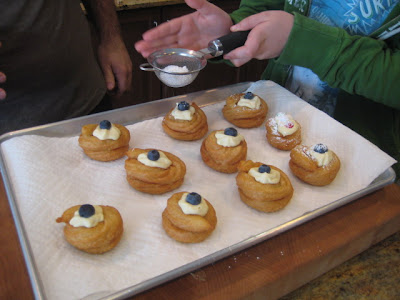
Fig.8. Sprinkle with powdered sugar and eat. I made these with my son and we pigged out. Looking forward to doing it with him again next year.


Wednesday, March 2, 2011

Celebrate The Woman in Your Kitchen


Fig.1. My grandmother, Piacentina Viselli. This picture was taken shortly before she boarded a ship heading to the new world.

Another round of the Montreal Highlights Festival has come to a close. This year, the festival celebrated women in the kitchen, a somewhat patronizing and outdated notion when we look at the role women have played in the domestic kitchen. From this very role, however, stems a conflict that arises when one juxtaposes the role women play in the restaurant kitchen at present, with how they are perceived when images of June Cleaver come to mind.
The woman’s rise to executive chef justly captures an air of accomplishment when one considers what was expected of women throughout history. In an arena dominated by men, this is indeed an accomplishment, if, for any reason beyond the food, for sheer ambition and overcoming misplaced preconceptions. But among the many roles wrongly subjugated upon women in days past, the role women played as the matriarch of the family, in my opinion, should be celebrated and held in reverent awe. Within my family, without my grandmother there to hold the family together, we would have been where it is now, growing apart, a result surely of which is due to my grandmother’s age and inability to do what she once did.
In my family, my grandmother was the glue that held the aunts, uncles and cousins together. Sunday family feasts were something that my cousins and I always looked forward to. She always made it look easy: fresh pasta, meatballs, sausages, rapini, roasted peppers, and fresh bread from the bakery; the Sunday norm. The reality is that it is easy; finding the willingness and the drive to do it amidst a five-day work-week and the kid’s soccer practice is not. This is, however, merely an excuse.
I recognize that what my grandfather expected from my grandmother was wrong, (a view still held in many parts of the world today.) What I got from her, as a grandson, was a sense of family and an obscene appreciation for food, and for that I hold her in the utmost respect. So in the spirit of this year’s Highlights Festival, visit your grandmother, or mother, and cook something together.

Zuppa di Lenticchie
Lentil Soup
Serves 6 to 8


Fig.2. Thick and hearty lentil soup. One bowl of this protien, filled dish will keep you going for a long time.

My grandmother made these lentils in the winter. The best part about them was eating them out of the pot while they sat in the cold room. Letting the lentils sit overnight develops more flavour.

Ingredients:

4 tbsp olive oil
6 slices bacon, sliced
3 onions, chopped
3 medium potatoes, diced
2 carrots, chopped
2 stalks celery
5 cloves garlic, whole
¾ cup white wine
1 28oz can whole plums tomatoes, crushed by hand
5 cups of cooked lentils (Cook according to instructions on the package, also, it’s best to use lentils that will keep their shape, my grandmother always used Eston green lentils. Read the package)
salt and pepper to taste

Directions:

Add the olive oil to a heavy bottom pot set over medium high heat. Sauté the bacon and onions until slightly golden and a nice fond forms at the bottom of the pan, about 8 to 10 minutes. Add the potato, carrots, celery and garlic and cook for about 5 to 6 minutes. Add the wine, and using a wooden spoon, scrape the bottom of the pan. Cook until wine reduces by half, add the tomatoes and the cooked lentils, season with salt and pepper, cover partially, and bring to a gentle simmer. Simmer long and gently until thickened and the carrots become tender. Should the stew become to dry, just add some chicken stock or some water. Serve hot with a sprinkle of pecorino cheese and a drizzle of extra-virgin olive oil.

Tuesday, February 15, 2011

Napoli, Music and Potatoes


Fig.1. Antonio De Curtis, in the role of Toto. De Curtis sang in many commedie musicali in the 1960's.

I had supper with an Italian expatriate last weekend. He began to tell me how impressed he was with the way in which the majority of young, Montreal Italians held on to the Italian language along with certain traditions, but, in the same breath said something that truly made sense to me: that we also need to hold on to traditions which define a culture. This Italian expatriate’s name is Enzo De Rosa, a music professor, composer and concert pianist. (Quite an exceptional one I might add) The traditions De Rosa is alluding to are musical ones; specifically, old folkloric music from Naples and the outlying areas encompassing Campania, Molise, and Puglia. So important is this music of old to De Rosa, that he has organized a concert entitled, 'O Paese D'o Sole', which will take place at the Leonardo Da Vinci center in St-Leonard. De Rosa will be accompanied by his wife, Isabelle Metwalli, herself a very accomplished soprano opera singer, and tenor Francesco Pellegrino, as they flow through a repertoire of old melodies from Naples; sung of course, in a very Napolitana dialect. Songs by Francesco Paolo Tosti, D'Annunzio and Antonio De Curtis--famous for his role as Toto--will be sung, along with some visual entertainment.

Artisan songs from Naples derive from operas, poems and romance songs known as romanza da salotto (salon songs). Singers, often referred to as cantautore, vocalized stories rather than songs, always in dialect, and always from the heart.

'O Paese D' 'O Sole, "Un appassionante viaggio nella canzone Napoletana tra melodie, immagini e poesia" will take place at the Teatro Mirella e Lino Saputo in the Leonardo Da Vinci center, February 25th and 26th at 8:00pm. For more information and to purchase tickets, call 514-955-8370


Fig.2. Very old and very Napolitana. The consistency of this dish is what makes it beautiful. That and the taste.

What De Rosa is doing with music I do with food. This dish has Napoli cooked all over it: rustic, traditional and fervently old school, Nonna stuff. Use any short pasta you have lying around for this recipe, if fact, in Italy they’ll often use several different pasta shapes in an effort to clean out small amounts of dormant pasta. This dish is unique because of the way the pasta is cooked, not separately, but together with the sauce. And don’t worry about cooking the pasta al dente here, a long slow simmer will release more starch thereby thickening the dish: mushy, gooey and very hearty, a wonderful example of Italian culinary ingenuity. This staple of cucina povera is a perfect cold weather meal. If, for some reason this dish has too much starch for you, might I suggest adding some bacon, the best protein in the world.

Pasta e Patate


Fig.3. Ingredients at the ready.

Serves 4
Ingredients:

Extra-virgin olive oil
2 medium carrots, diced
1 celery stalk, diced
2 medium onions, diced
3 large potatoes, diced
1 large garlic clove, minced fine or pressed
2 large garlic cloves, crushed and left whole
1 28 oz can of whole plum tomatoes with the juice, crushed by hand (you can also use 2 cups of homemade tomato sauce if you have.)
App 250g of short pasta
1/2 cup fresh parsley, chopped or torn by hand
Water
Chili pepper
Salt and pepper
Grated parmesan cheese

Directions:

In a large pot, heat the olive oil over medium high heat until hot but not smoking. Add the carrot, celery and onion and sauté until slightly softened but not browned, about 8 to 10 minutes. Add the potatoes and fry for about 2 minutes. Add the garlic, stir well and fry for 1 minute. Add some hot water, (I boil some water in an electric kettle and keep it on standby) just enough to barely cover the potatoes, and stir making sure you scrape the bottom of the pot. Semi-cover and simmer (stirring once in a while) for about 8 minutes. Add the tomatoes and bring to a simmer. Once simmering, add the pasta and enough water to just cover the pasta, bring the heat down to medium, stir and semi-cover with lid, (make sure you stir a few times while it's cooking to prevent the pasta from sticking, if you need to add more water, just add enough to barely cover the ingredients.) Once the pasta is cooked, the potatoes tender, and the sauce slightly thickened, you're ready to eat. (at this stage the sauce should have thickened, if it hasn't, continue to simmer semi-covered until everything thickens and comes together.) Add the chopped parsley and season with salt and pepper. Serve in a warm bowl, sprinkle with some dried chili pepper, some grated pecorino cheese and a drizzle of olive oil.


Fig.4. After you add the potatoes, cover with just enough water to barely cover the vegetables.

Fig.5. Again, after you add the pasta, add just enough boiling water to barely cover. At this stage stirring is important because the pasta can stick to the bottom.

Friday, February 4, 2011

Muffuletta
A New Orleans Sandwich with Sicilian Roots

Super Bowl Snacks, Part 3


Fig.1. Olive salad on the bottom, followed by meat, cheese, more meat, more cheese, and more olive salad. It all fits because the interior of the bread is hollowed out.


A muffuletta is a sandwich steeped with tradition in New Orleans. Claimed to have originated in 1906 at the longstanding, Italian grocery store, Central Grocery. A muffuletta is basically a sandwich of cured meat, cheese and pickled vegetables and olives. (A mixture referred to in New Orleans as olive salad.) The Sicilian connection to this sandwich, however, rests not with its ingredients, but with the word muffiletta. The linguistic book, Introduzione allo studio del dialetto Sicilaino, has the word muffiletta defined as, pan buffetto, or aerated bread.
Muffiletta bread, as it's still referred to today by many Sicilians, (including my barber, Nino) is crusty and hard on the outside and soft in the middle, and usually braided; a bread that's meant to be ripped apart. This inability on the bread's part to be turned into a sandwich prompted Muffuletta creator, Salvatore Lupo--himself a Sicilian immigrant--to find a bread suitable enough to hold vast amounts of cured meats, cheese and pickled giardiniera. Lupo settled on what is now referred to as a muffuletta loaf: a soft, round, almost focaccia style bread.

Muffuletta
Makes 1 sandwich

Fig.2. That's a mighty big "sandweech" you got there.


This is just my version of a New Orleans' muffuletta style sandwich. It can also be made with a larger, round "pagnotta" style bread, just add more ingredients. This sandwich is big, messy and requires napkins. Prepare "the muff" one hour before kick off and let it rest in the fridge. Eat it over a plate to catch all the bits that can't fit into your mouth.

Ingredients:

For the olive salad

1/2 cup marinated eggplant (mild or spicy, your choice)
1/2 cup pickled vegetables, chopped
1/2 pitted olives, chopped (again, your choice, just make sure they're good quality brine cured olives)
1 clove garlic, minced
1 tbsp capers
1 tbsp red wine vinegar
1 tbsp extra-virgin olive oil

For the sandwich

1 soft, round Italian style or sourdough bun
5 slices salami, sliced thin
5 slices capicolo, sliced thin
4 slices ham or prosciutto cotto, sliced thin
4 slices of provolone, sliced thin

Directions:

For the olive salad: combine all of the ingredients and mix. Cover and refrigerate olive mixture for four hours or overnight.
When you're ready to assemble the sandwich, cut bread in half and remove some of the interior part of the bread. Spread the bottom bread with 1/3 of the olive salad, and the top bread with the rest. Add your sliced meat and cheese, wrap the muffuletta tightly with plastic wrap and place in the refrigerator for one hour.

Fig.3. Make sure you chop the olive and pickled vegetables. I'm using the Spanish Crespo anchovy stuffed olives here, but feel free to use whatever pitted olives you like. Garlic is a must. Read the recipe and don't just look at the picture like some of you have been doing.

Fig.4. Begin layering.

Fig.5. Press the sandwich, wrap tightly and refrigerate for one hour.

Tuesday, February 1, 2011

Who Wants a Pork Cone? I do I do!
Super Bowl Snacks, Part 2


Fig.1. Mortadella cones. The purée does begin to soften at room temperature so treat it like real ice cream and start licking.


No, it’s not a strawberry cone, it’s a swine cone. Nothing soothes the Y chromosome quite like puréed pork. Super Bowl night, like any other gathering, requires a dessert course, and in my opinion, there’s no better dessert than sweet, succulent, salted hog. This cone is made of puréed mortadella that has been hardened in the fridge. The olive oil incorporated with the meat hardens in the fridge making it possible to form in whatever shape you want.

Warning: once you lick pork, there's no going back.


Mortadella Cones

Makes 6 to 7 cones


Nothing far-fetched in this recipe, it’s just another variation of a pâté.


Fig.2. Made a second batch but made it look like an ice cream sundae instead. I drizzled the mortadella with vin cotto, thickened balsamic vinegar, and some pine nuts.
Directions:

Follow the recipe for Spuma di Mortadella posted on January 12th 2011. Pour puréed mortadella in a loaf pan (a loaf pan facilitates scooping), cover with plastic wrap (make the plastic wrap touch the mortadella) and place in the refrigerator for a minimum of four hours, or up to a day before. When you’re ready to serve, scoop with an ice cream scoop and serve.

Sunday, January 30, 2011


Super Bowl Snacks, Part 1


Fig.1. Mozzarella in carrozza is Italy's version of grilled cheese. Make sure you use a soft mozzarella to ensure the ooey gooey texture seen above.

The Superbowl is coming up next Sunday, I'm hosting, and I couldn’t be more excited. Yes I’m happy the Packers have made it till the end, but I get more exited with thoughts of food: specifically, with having to plan and conjure up the salty, meaty morsels usually associated with testosterone, sports-and-beer oriented, snack foods. Again, I look to Italy, but rather than look into Nonna’s kitchen or some fancy trattoria in Rome, I look to the streets of Italy.
Italian street food is nothing new, in fact, what we today refer to as fast food existed during the reign of the Caesars in the form of urban street food. Street vendors in ancient Rome fried offal and grilled fish for busy Romans on the run. Today, gnocci fritti can be bought in the towns of Emilia, porchetta panini everywhere in Lazio, and grilled fish can be eaten late at night in the streets of coastal Sicily.

Mozzarella in Carrozza

Mozzarella in carrozza, (Italy’s version of a grilled cheese sandwich, but more like French toast with cheese) is available in most bars and tavoli caldi in Italy. This is the basic version. I've seen it done with all manners of sliced cured meat, and even with a slice of tomato (when they're in season of course) Many Italians also pour tomato sauce over the sandwich, which is quite nice but then requires the use of utensils. Italians refer to the bread used as, pain carré, and while any soft, sliced bread can be used, I like to by a fresh loaf and cut it myself so I can control the thickness. It’s also the perfect dish to make during halftime, just make sure your wife prepares your mise-en-place during the last 5 minutes of the second half.


Fig.2. Stack'em high and eat your troubles away; just don't make a habit of it.

Ingredients:
Serves 4

Olive oil, for frying
8 slices of soft white bread, cut thick, crusts removed.
Soft mozzarella (I like to use Mozzarina Mediterraneo by Saputo, but any mozzarella in brine will do, just make sure you drain it properly)
3 eggs
1/3 cup of milk
salt and pepper
flour, for dredging


Directions:

In a pan, heat the olive oil over medium high heat, the oil should reach a ½” up the side of the pan. Assemble your sandwiches by placing a piece of cheese on the bread followed by the top bread. While this might seem obvious, it’s important that the cheese not pass the bread, otherwise the exposed cheese will melt too quickly in the hot oil. Whisk the eggs and the milk until smooth, season with salt and pepper. Using the palm of your hand, press the sandwich down, it’s important that the bread be fresh and soft. Dredge the sandwiches in the flour, making sure you cover all four edges as well as both sides. Shake any excess flour off the bread and dip the sandwiches in the egg mixture. Place in the hot oil, (make sure your oil is not too hot, you can test the oil by dipping a piece of the removed crust in the egg and dropping it in the oil, when it bubbles and fries evenly, the oil is good to go)
Fry until golden brown on both sides and serve immediately.
Recipe can be doubled.


Visual Aides


Fig.3. It's worth going to a bakery and getting a fresh loaf.


Fig.4. Crusts cut off for this grilled cheese. Also, feel free to add other vegetables or animal products to your sandwich. Just make sure whatever you use stays in the center of the bread and that your cheese be not completely covered otherwise the sandwich will not hold when the cheese melts. The peperoni is my sons, while the anchovy fillets are mine.


Fig.5. Press down the bread making sure the outer edges of both pieces touch.


Fig.6. Dredge the sandwiches properly, edges and sides. shake off any excess.


Fig.7. Drown your sandwich in the egg mixture.


Fig.8. Fry sandwiches until hot. Make sure your oil is hot but not too hot (see directions for more information.)

Wednesday, January 12, 2011

Would The Real Mortadella Please Stand Up!


Fig.1. Mortadella sliced fresh by Fabrizio: silky, melt in your mouth and studded with pistachios. The mortadella forms are also much bigger in Italy than they are here.

I can't think of a better way to start the year than with pork! Mortadella is by far the most misunderstood salumi. Unfortunately, the mortadella available to us here in Montreal is an inferior mixture at best: rubbery, over-salted, and more akin to spam than a proper salumi. In Italy, (especially the D.O.P designated mortadella Bologna) most mortadella varieties are made with pork meat, real pork fat (as opposed to processed fat), salt, and pistachios. Anybody who has sampled thinly, sliced, fresh mortadella in Italy will know what I'm taking about: é tutta un'altra cosa (it's something completely different)
The history of mortadella is as layered as its ingredients. Bartolomeo Scappi, probably the most important cook alive during the Renaissance, published a six book tome dedicated to the culinary arts, complete with step-by-step instructions and illustrations. Scappi's recipe for mortadella consisted of pork and pork fat, chopped with two knives into a fine paste, three different spices (he doesn't say which although we can assume salt and pepper to be two of them) dried fennel, mint, marjoram, and wild thyme. Scappi, as well as other cooks in the 1500s and 1600s, gave mortadella "typicality". A term coined by historian John Dickie in his book, Delizia! The Epic History of the Italians and Their Food. "Mortadella", Dickie asserts, "(had) acquired several of typicality's key components: a precise recipe, protective legislation, an exaggerated ancestry, and a heavy investment of civic patriotism."(Dickie141) As Parmesan cheese had become synonymous with the city of Parma, so too would mortadella be with the city of Bologna.


Fig.2. A fresh mortadella panini I had in the beautiful town of Lucca, Nothing else is needed in this sandwich except fresh bread and fresh mortadella.

In Bologna. mortadella is used in many different ways: in omelettes, in tomato sauce (especially in Ragu Bolognese where it's added in cubed form) stuffed in ravioli and tortellini, or, my favourite way, cut thick, pan fried until golden, and drizzled with honey.
Here's a recipe that recreates what mortadella looks like before it's place in a casing and solidified. Serve this pasty mash as an appetizer with some toasted crostini rubbed with garlic.

Fig.3. Spuma di mortadella crostini, I usually let my guests make their own.

Spuma di Mortadella
Puréed Mortadella

Ingredients:

1/2 kilo of mortadella, not sliced but cut thick and cubed
1/3 cup grated Parmigiano-Reggiano cheese
1 tsp freshly grated nutmeg
2/3 cup extra-virgin olive oil (you want to use the really good stuff here)
1/2 cup shelled pistachios

Directions:

In a food processor armed with a metal blade, pulse the mortadella, the cheese, the nutmeg and the pistachios until puréed. With the machine running, add the olive oil in a steady stream (if you find the mixture to be too thick, add some more olive oil, if you prefer it thicker add less or mix in some bread.) Season to taste, cover, and refrigerate. Can be prepared a day or two in advance-in fact, it tastes better the next day, just make sure you bring it to room temperature before serving. I also like to sprinkle a few pistachios over the puree. Serve with toasted bread rubbed with garlic or with crackers.


Fig.4. The majority of Canadian mortadella seems to lack pistachios, so add your own.