Tuesday, May 10, 2011

Le Marchand du Bourg: The Best Dry Aged Rib Steaks in Montreal

Fig.1. Master butcher Marc Bourg standing in front of his signature, 40 day old, dry aged rib steaks, and as you can see by the picture, it's the whole rib.


Le Marchand du Bourg is a place I stumbled on by chance. I was walking along Beaubien Street just east of Papineau when I came across signs on the window declaring meat to be within. As I peered through the window, owner Marc Bourg kindly opened the door for me and assured me that I would be safe inside. I walked in, always eager to gaze at meat, but saw none. Where meat fridges should have been sat a large wooden church pew, and wooden shelves festooned with books, little sculptures, straw baskets and other various antiques; all that seemed edible on the shelf was Marc's home-made, Montreal steak spice. Opposite the shelves, an old counter also made of wood. The counter holds a cash register, an old wooden analog radio--the kind with a dial--and a rotary phone--also the kind with a dial. In the back of the store looms a large walk in fridge fashioned to look like an old, wooden cabin, complete with wood shingles and large windows. There are no packaged meat products in Marc's shop wrapped in cellophane or hermetically sealed. Marc cuts your meat in the walk-in fridge while you look on: you choose the animal, the cut and the size. The animals that Marc sells are lamb, veal, pork (all from Quebec), and of course, beef, his specialty. Marc's beef is Angus, and he's one of the few butchers in the city who dry ages his rib steaks. "I age my ribs whole for forty days, I have to set myself apart. That's why I don't sell chicken, everybody has chicken, but not everybody has dry aged beef."
Marc Bourg decided to open Boucherie Le Marchand du Bourg because he couldn't take the everyday practices that went on in the big supermarkets anymore. "The amount of waste is disgusting, at the end of every day, so much meat went into the garbage, I couldn't take it anymore." Marc’s passion is evident as he tells me that people need to change the way they buy their meat. That meat shouldn’t be bought in bulk and forgotten in the freezer, instead, we should just buy what we need and eat it right away.
While the dry-aged rib steaks need to be ordered in advance, Marc does sell other cuts of meat like filet mignon and flank that can be purchased on the spot. Pork cuts are also available 'sur place' but lamb and veal need to be ordered.
Getting to know Mark is an investment in meat: He's the type of butcher you can just ring up when you need some meat, he's the type of man who'll have your order ready and packaged for you (wrapped in nice brown paper) if you're in a hurry, and he's the type of person who'll sit next to you on his church pew and engage in friendly discussions ranging from summer barbecues to the importance of treating animals humanely.


Fig.2. Marc's butcher shop is a step back in time, a time when the neighbourhood butcher new your name and what your favorite cut of meat was.


Fig.3. The walk in fridge in, Le Marche Du Bourg has a a big window so you can see Marc at work.


Fig.4. Marc at work.


Fig.5. Two, 40 day old ribs aching to meet my cast iron pan. Did I mention my pan was scorching hot?


Le Marchand du Bourg: 1661 Beaubien east, (near Papineau) 514-439-3373

Thursday, April 14, 2011

La Bête à Pain: The Staff of Montreal

Fig.1. Just two door over from Le St-Urbain, La Bête à Pain is a great addition to Fleury Street.


As I'm writing this article, I'm eating bread. Not just any bread, but bread from La Bête à Pain. A new bakery which opened this week and is headed by Le St-Urbain's very own, Marc André Royal. (The bakery is situated just two doors west of Le St-Urbain.)


Eating at Le St-Urbain last week (always a great meal in case you were wondering), I was given some bread as is customary in most Montreal restaurants, only, this bread was unlike any I've ever had in this city: Earthy, fermented and teaming with aromas of cereal and yeast. The stretchy dough and crackling crusts made me think of Sullivan Street Bakery in New York, it's that good. The bread man, Thomas Bouchez, hails from the Champagne region of Reims, France, just east of Paris. Bouchez takes his bread seriously. The starter dough, or `mother`, is of Bouchez's creation. Royal aptly points out to me that the starter is still very young, and that the older it gets, the better and more complex the bread's flavour will become; a perfect reason to keep buying bread at La Bête. Lunch is also served at La Bête à Pain. Ciabatta sandwiches filled with Matane shrimp (the ciabatta bread, by-the-way, were the thinnest I've ever seen, perfectly suited for sandwiches) and various bread tarts were being served. Lunch items change from day to day, "I'll leave it to whatever the gang of cooks and bakers decide to make" says Royal. La Bête à Pain is exactly what this city needs: a place that respects food and fosters the creativity needed to make edibles exciting again.


Fig.2. A paoched pear, cranberry jam and almond cream tartin. It takes a special mind to come up with something like this.


Fig.3. Bread master, Thomas Bouchez works his magic. It took every ounce of will power I had not to stick my face in the dough. A perfect pillow.


Fig.4. Baskets of bread.


Fig.5. Assorted sweets.


Fig.6. Duck eggs, headcheese, demi-glace, arctic char gravlax, duck magret, organic salumi and various sous-vides all available. Some made in the bakery and some in the restaurant next door.


Fig.7. Thomas Bouchez, a man coated in flour.


Fig.8. Cooling down


Fig.9. One of the pain de campagne didn't survive the ride home in one piece.


Fig.10. What do you do with great bread? You make 'nu bel panino' of course.


La Bête à Pain, 114 , rue Fleury Ouest, Montreal (Ahuntsic area, just west of St Laurent) 514.507.7109

Saturday, April 9, 2011

A Tale of Two Veggies Fig.1. The batter around the asparagus traps the prosciutto. Eat these hot.

Spring is weighing heavily on my mind these days. The peek-a-boo heat of the April sun teases; sprouting desires of driving around with the windows down and leaving my house with nothing but my Speedo on. So with that appetizing image in mind, let’s discuss asparagus, one of the first vegetables to emerge, usually during the first week of May. As I wait for Birri’s asparagus to grace his wooden shelves, finding new ways to cook the green and white spears adds to my culinary neurosis, until I recalled an article about René Redzepi I read in The Independent.
Out there on a farm with the people who grow it, you follow, week by week, what it takes this little mushroom to come forward, and when it's in its most perfect state, you taste it and it becomes your reference point for how mushrooms can taste. It's a perfect moment. That's the real luxury, much more luxurious than getting foie gras or caviar. You're in nature, and you pick this thing and come back with it to the kitchen, and think, am I going to blend this, and boil it, and jellify it? And you can't. You've watched it until it's become part of you.(Nov25-2010)
Replace Redzepi’s romantic mushroom with asparagus (or any freshly grown vegetable) and what I should be left with is simplicity itself: A vegetable out of season can be puréed, blended, mixed and otherwise pulped beyond recognition, but a vegetable in season should be left intact, allowed to show every taste bud in the world that salt, pepper and butter are not welcome—“eat me raw”, the May asparagus said. It would indeed seem disrespectful to use Birri’s fresh asparagus in the recipe provided below, so use the pathetic looking, imported asparagus from the supermarket instead. Then again, this recipe would probably taste so much better if I used Birri’s asparagus, in which case, this whole blog post is neither here nor there. Ahh, after a (very) brief moment of culinary clarity, it would seem the neurosis is back; hello my friend, I’ve missed you.

Fried Prosciutto Wrapped Asparagus
makes 12 spears


Fig.2. lying in waiting.

Ingredients:
12 asparagus
12 sheets of prosciutto, sliced very thin

for the batter


1/2 cup 00 flour, or all-purpose flour
1/2 cup milk (2% or whole is fine)
pepper


Directions:


Roll the prosciutto tightly around the asparagus and set aside. Make the batter by combining the flour and milk and pepper, mix until smooth. Add some vegetable oil to a pan set over medium high heat. Coat the asparagus in batter, and fry. (To be sure the oil is ready, add a few drops of batter to the oil, if the drops begin to fry immediately, it’s ready, or use an oil thermometer. The oil is ready when it reaches 350 degrees F. It’s also a good idea to let any excess batter drip off the asparagus. And don’t overcrowd the pan or your oil will cool.) When the batter turns golden brown on one side, turn them over and do the same on the other side. Transfer to a plate lined with a few paper towels. Let them cool for a few minutes and serve.


Fig.3. This is an after shot, taken 5 minutes after my son, (aka, The Boy) spotted the spears.


Fig.4. This is what becomes of any leftover batter: Add a ton of grated cheese, such as Parm or Pecorino, and make pancakes.


Announcement: I don't usually do these things, but then again, I haven't been this gastronomically excited for quite a while. Hold on to your gluten levels because we're finally about to get great bread in Montreal. I'm talking about long fermentation, thick,crackling crusts, and moist, stretchy insides. Bread reminiscent of Sullivan Street Bakery in New York and Tartine Bakery in San Francisco. I'll fill you all in on Wednesday, or Thursday in case of a carb overload.

Thursday, March 31, 2011

Canadian Food Anyone? Fig.1. Hanging Caribou meat to freeze in Nunavut, Calgary Angus beef, Maritime Lobster, Pacific salmon and tortiere de Lac St-Jean.


If I were to ask you to define Canadian Cuisine how would you respond? Is there even such a thing as Canadian food? Countries, such as Italy and China have very identifiable culinary traditions and staples, but when someone from China thinks about their upcoming visit to Canada, do any dishes come to mind? Can a visit to Canada make anybody hungry? Not really. Provincial specialties are another story. If we look at food in Canada from a regional perspective, a number dishes stand out: Fish and brewis in Newfoundland, and poutine and tourtiere in Quebec, are just a few specialties that can be found in Quebec and the Maritime Provinces.

Make your way West into the Prairie provinces and British Colombia, and dishes are replaced with ingredients: Wheat, beef and pacific salmon to name a few.

There is no culinary commonality uniting us, Canada lacks that all encompassing tomato sauce that unifies Chianina beef in Piedmonte, with Wild boar in Tuscany, and tuna in Sicily. But our proverbial "pot" in Canada hasn't begun melting yet, we're still in the adding and mixing stage with regard to our food. I believe it's premature to expect commonality within Canadian cuisine at this point in our food evolution. In time, food in Canada will evolve. Regional cuisine and ingredients will fuse into something that will identify a nation rather than a region. (that might be asking a whole lot given our situation in Quebec.) Caribou, seal, Pacific and Atlantic salmon, Calgary beef, Quebec venison and Maritime seafood and potatoes will all come together. (Might I suggest making a National tourtiere with said ingredients. We can call it a Harper Pie.)

The current culinary revolution in Denmark regarding Nordic cuisine could provide some insight into how food and cuisine in Canada might evolve. Although factors such as immigration and economy differ, both countries share many similar traits with regard to climate, geography, wild life and indigenous peoples. Chefs such as Rene Redzepi (Chef of Noma, in Copenhagen, who last year published a cookbook entitled, Noma, which I ordered one year ago on Amazon and have yet to receive.) have helped redefine Nordic cuisine. Bringing together ingredients found all over Scandinavia and cooked with "time and place" in mind. A term coined by Redzepi during an epiphany incurred as he hunted wild musk oxen on a trip to Greenland.


Fig.2. Dried beef, marinated carrots, stout marinated egg, horseradish cream, pumpernickel sandwich on top and a beef tartar, egg yolk, spicy gherkin, caramelized onion cream, rye bread sandwich.


Upon this culinary template, Chefs Seth Gabrielse and Michelle Marek of Laloux/Pop fame have put together an event entitled 'Smorgasbord Chez Pop', which was held last Monday, March 28th. On the menu were Nordic staples such as smoked oysters, house smoked salmon, scallop gravlax, dried beef, and marinated eggs to name but a few. If the food served at Pop was any indication of Canada's culinary potential, I can only hope that our vast country, and the cooks in it, come up with something while I still have my teeth. Until then, I'll begin working on the Harper Pie.


Fig.3. Smoked cheese spread, apple and walnut salad, herbs,rye bread.


Fig.4. No offense to Chefs Seth and Michelle, but post-dessert at La Banquise seemed like a good homage to local, French Canadian cuisine.

If you're wondering what the above poutine has to do with Canadian food, it seemed like a good way to cap off the night; poutine being a perfect-and delicious-example of regional, provincial food. Not that this late night poutine (which was enjoyed at La Banquise) was consumed for academic reasons, it's more like I was swayed there. Like Marlowe's Faustus, I had an angel telling me eating poutine after midnight would be bad for my gastro-intestinal system, and a devil persuading me that there is no such thing as a 'bad' time to eat poutine. Thank god the devil won.

Wednesday, March 23, 2011

Ravioli Stuffed With Olive Oil: Easier Said Than Stuffed


Fig.1. When cut, the oil in the ravioli releases and mixes with the vin votto in the plate. This recipe is all about the olive oil, so make sure it's a good one.

Much has been touted about olive oil. The benefits of good quality olive oil has advantages both from a nutritional aspect as well as taste; but olive oil conversations and research can lead to confusion. In an effort to keep things simple, I keep two olive oil varieties in my kitchen: one for cooking—which gets heated—and one for finishing— which gets splashed across meat, pasta, soups and salads.
When it comes to olive oils, it helps to speak to an expert. Three questions should be asked: where are the olives from? Is the oil blended? (ask what does the blend consists of) And how are the olives pressed?

First cold pressed olive oil is the best you can buy, some producers in Italy and Spain, however, advocate heating the oil slightly in the belief that it improves flavor. And if a producer is pressing old olives, or pressing fruit that travels long distances, than a 'first cold pressed' label is only there as a marketing tool.
When good quality olive oil is concerned, you don’t always get what you pay for. Again, ask someone who knows. Specialty shops will let you sample before buying. And it’s all right to use different varieties from time to time in an effort to change things up.
Because of the rampant ‘olive oil fraud’ in North America, it pays to speak to an expert and get informed, here are some places in and around Montreal that can help. Specialty grocers are also a good place to get informed about olive oil.

www.oliveolives.com/en/ (locations in Montreal and Laval)

Les Douceurs du Marche (located in the Atwater Market)

Olive & Epices: 7070, av Henri-Julien, Montréal. 514 271-0001 (Located in the Jean-Talon Market) http://www.epicesdecru.com/


Ravioli Ripieni Con Olio di Oliva
Ravioli Stuffed With Olive Oil
Makes about 20 ravioli


I don’t know what I was thinking when I dreamed up this recipe; it would have been easier to win an argument with my wife than make these ravioli. Once I get something in my head however, I need to see it through. If your patience can persevere, these ravioli provide an optimal vehicle to sample how satisfying and important a good quality olive oil truly is.
As with most things I do, I made things complicated when it first came to solidifying the oil, experimenting with everything from gelatin to ground chia seeds. In the end, I was inspired by oil stored in my cold room that had congealed as a result of the frigid temperature.


Ingredients:

For the pasta:
20 tbsp (or 1 1/4 cup) good quality, extra-virgin olive oil
200grams (or 1 1/2 cup) 00 flour, plus extra for dusting
3 eggs
1 egg, beaten (this egg will be used to seal the ravioli and is not mixed with the flour.)

For the garnish:
good quality vin cotto or thickened balsamic vinegar (available in Italian specialty shops)
Freshly grated Grana Padano cheese
Sea salt

Directions:

Pour the olive oil into a bowl and place in the freezer for several hours or overnight.
To make the pasta, mound the flour in the middle of a work surface and make a small crater in the center. Add the eggs to the center of the flour and begin to incorporate the flour and eggs using your fingers or a fork, in a circular motion, until you get a nice even dough. Knead the dough for 10 minutes, wrap in plastic wrap, and let it rest in the fridge. (This dough needs to be cold or it will melt the oil too quickly.)
Remove the oil from the freezer just before you begin to roll out the pasta. Cut 1/4 of the dough and feed it into a pasta machine. Spin out a thin sheet (not too thin) and lay it on a well floured surface, being careful not to get too much flour on the top of the pasta sheet (the top is where you'll place the olive oil)
Using a spoon. crack off a piece of the frozen olive oil and place on the pasta sheet, making sure to leave space between each piece of oil. Brush some of the beaten egg around the oil pieces, this egg will create a seal which will keep the olive oil, once melted, contained within the pasta. (It's important that the oil not touch the sections of the pasta brushed with the egg.) Fold the top of the pasta over and seal shut, making sure no air pockets remain in the ravioli. Press the edges firmly and cut with a pasta cutter. Place ravioli on a floured cookie sheet and store in the freezer immediately. (don't make all the ravioli before freezing, or the oil will melt. The seal only becomes solid once the egg dries completely.) Repeat with the rest of the pasta.
Once the ravioli are frozen, bring a pot of salted water to a boil and cook. While the pasta cooks, drizzle some of the vin cotto on the bottom of plate, remove the ravioli from the water with a slotted spoon (be gentle, the ravioli are delicate, and don't worry about oiling the ravioli, some oil will leech out into the boiling water which will prevent the ravioli from sticking to one another.) place the ravioli over the vin cotto, sprinkle with sea salt and grated cheese and eat. Serve with some fresh bread to sop up all of the oil and vinegar left on the plate.


Fig.3. You need to work fast before the oil melts all over the pasta. The oil is frozen.

Fig.4. Brush the edges of the pasta with a beaten egg. This will create a seal strong enough to contain the oil once it cooks.

Fig.5. When you fold the pasta over make sure the brushed egg comes into contact (press the edges together well), and that no air pockets remain in the ravioli. This is tricky because you need to make sure the oil doesn't move around and ruin your egg seal.


Fig.6. Cut with a pasta cutter.


Fig.7. Place on a floured cookie sheet and freeze immediately until ready to cook.


Tuesday, March 8, 2011

Zeppole di San Giuseppe-Fry Them And They Will Come

(This is a tag-team article. After reading this article, click on the link provided below and read food writer, Marcella DeVincenzo’s take on Zeppole in Montreal.)

Fig.1. Zeppole di San Giuseppe: fried dough and cream. Simple and good.


The history behind zeppole di San Giuseppe isn’t well documented. Some historians speculate it derives from around 500AD during an annual festival held in mid-March when the Romans would honor their wine god, Bacchus, and their wheat god, Silinus, by consuming copious amounts of wine and fried dough. St Joseph’s day, a patronage still celebrated in Italy today amid large feasts and celebrations, also takes place in mid-March, March 19th to be exact; somewhere along the course of history, Silinus and St Joseph were bestowed with a zeppole.
Many also believe that St Joseph is the patron saint of pastry chefs, this is wrong, at least according to the Vatican. St Joseph is actually the patron saint of confectioners; St Honoré is in charge of pastries and the people who make them. All of you pastry chefs with a charm of St Joseph around your neck, don’t blame me, take it up with Benedict, or, start making confections.
One thing seems for certain, the modern day zeppole originated in the south—probably Naples, but many Sicilians would disagree. In Sicily, the zeppole is often referred to as a sfinzi. Pre-1950 zeppole recipes usually contained yeast, and had mashed potatoes, flour and semolina as the main ingredients. The zeppole were finished with a roll in sugar or a drizzle of honey; the creamy fillings came later.
Regarding the etymology of the name and some historical background, food historian Clifford A. Wright, author of, A Mediterranean Feast, had this to say:

The medieval Arab zalābiyya, a kind of deep-fried
doughnut sprinkled with sugar, exists today, both
with that name and many others, including sifanj.
Sifanj, coming from the Arabic word for “sponge,”
[..]This sifanj exists in Sicily, too, where it is called
sfinci (or sfìncia) the word also derived from the
Arabic.
East and North End Bakeries

The original idea for this post was to find a zeppole in Montreal similar to the one's being made in Italy at present. Zeppole, of course, as with all Italian fare, change depending on the region of Italy you’re in; there is one constant in Italy however: the zeppole are usually fresh. (Day old zeppole are sold as such and at a reduced price.) Italian bakeries in Montreal all sell zeppoles this time of year. I did a zeppole run of the usual bakeries in the East End; what I hoped to find were fresh, fried pieces of dough, just out of the fryer and piped with a fresh cream, what I found rather, were substandard, precooked pastries, void of love. To the vast majority of Italian bakeries in Montreal I say this: Fry them fresh and they will come. (and while you’re looking at the zeppole, you might want to do something about your bread too.)
So while there isn't much going on in the way of edible zeppole in the East and North End of Montreal, can Little Italy provide us with zeppole good enough for St. Joseph to bless? Find out what Marcella DeVincenzo, aka. EatalianGirl, has to say in the continuation of this zeppole reportage on http://www.eataliangirl.com/?p=326

Zeppole Di San Giuseppe

Makes 8 to 9 zeppole


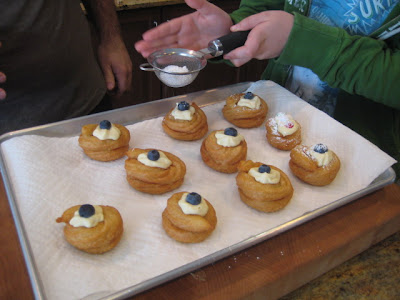
Fig.2. Topped with last year's blueberry jam.

This recipe comes straight from Italy. Nothing complicated here: a fried piece of dough filled with cream. All I ask is that you eat it the same day you make it. Day old zeppole can be reheated in an oven.
When deep-frying anything, be careful. Have a lid to cover the pot of oil near you at all times (should the oil catch on fire, just put the lid on it.) and a small kitchen fire extinguisher is also a good idea. This is a perfect recipe for a deep-fryer.

For the dough:

250 ml (or 1 cup+2tbsp) water
70 grams unsalted butter
1 tbsp vanilla extract
150 grams (or 1 cup) 00flour
40 grams (or 3 tbsp) sugar
1/4 tsp salt
zest of 1 lemon
3 eggs

For the filling:

1 cup ricotta
1/4 cup maple syrup
zest of 1/2 a lemon


Directions:

In a medium heavy-bottom pot, bring the water, butter and vanilla extract to a simmer. Once the liquid is simmering, and all of the butter completely melted, add the flour, all at once to the simmering liquid and stir (using a wooden spoon) until you have a unified ball of dough. Turn the heat to low and continue stirring the ball around for 2 minutes to cook off some of the moisture in the dough. Transfer the ball of dough into a large bowl, spread it out a little and let it cool down (Don’t let it get too cold, it should be warm, but not hot, for the next step) Add the sugar, salt and lemon zest and stir. Add the eggs one at a time, adding the next egg only after the first is completely incorporated. (You can use a stand mixer for this step. Also, when the egg is added, your dough will at first look like it separated into pieces, this is normal. Keep mixing vigorously and the batter will come back together.) Scoop the batter into a piping bag and set aside.
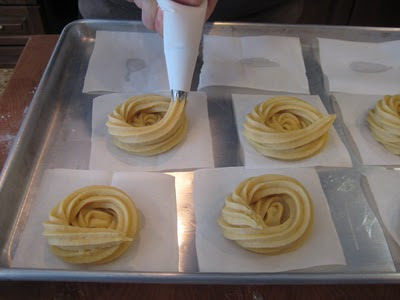
Cut nine, 4”x4” squares of parchment paper. Place the paper squares on a cookie sheet, make sure they are flat, (it’s important that the paper not move while you’re piping) I like to dab the bottom of the parchment with corn syrup so it sticks to the cookie sheet. Starting in the center of the paper, pipe the batter in a circular motion with every new circle resting just outside the other (see picture fig) For the last circle, pipe on top of the outer circle, forming a border. (If you wish to keep things simple, you can just pipe the batter to form a ring, like a doughnut.)
Pour three inches of oil in a deep pan or pot. Heat the oil to a temperature between 325 degrees F to 335 degrees F. (You really need an oil thermometer for this.) Slide the zeppole into the hot oil with the parchment paper and fry zeppole, about 8 minutes on one side and 6 to 7 minutes on the other. (Do not fry more than two zeppole at a time and you can remove the parchment paper a couple of minutes after it's placed in the oil. Don't worry, the paper won't burn.) It's important that the zeppole be completely covered in oil for several minutes so that the center (or hole) of the zeppole cooks through. Once the zeppole are a deep, golden brown, transfer to a cookie sheet lined with paper towels to cool.
To prepare the filling, simply whip (it's best to use a mixer for this) 1 cup of ricotta with 1/4 cup maple syrup, and the lemon zest. (I used maple syrup and a blueberry topping in an effort to keep things local and in season, feel free to add sugar to the ricotta if you wish. How much to add is up to you.) Whip on medium speed for about 5 to 6 minutes, until very creamy. Pipe (or spoon) the ricotta into the zeppole, top with whatever you want (Stay away from the red maraschino cherries, the sulfur dioxide they are brined in will kill you. In Italy, zeppole are usually topped with black sour cherries. If you made a jam last fall, use that.)


Fig.3. Start piping from the center and go in a circle.


Fig.4. On the last go-around, pipe on top of the outer circle, creating a border.


Fig.5. Holding the corners of the parchment paper, slip the zeppole and paper into the oil. Do not use wax paper!


Fig.6. After a couple of minutes, remove the parchment paper with some kitchen tongs.


Fig.7. Stick the tip into the zeppole and pipe, filling the pastry.

Fig.8. Sprinkle with powdered sugar and eat. I made these with my son and we pigged out. Looking forward to doing it with him again next year.

Wednesday, March 2, 2011

Celebrate The Woman in Your Kitchen


Fig.1. My grandmother, Piacentina Viselli. This picture was taken shortly before she boarded a ship heading to the new world.

Another round of the Montreal Highlights Festival has come to a close. This year, the festival celebrated women in the kitchen, a somewhat patronizing and outdated notion when we look at the role women have played in the domestic kitchen. From this very role, however, stems a conflict that arises when one juxtaposes the role women play in the restaurant kitchen at present, with how they are perceived when images of June Cleaver come to mind.
The woman’s rise to executive chef justly captures an air of accomplishment when one considers what was expected of women throughout history. In an arena dominated by men, this is indeed an accomplishment, if, for any reason beyond the food, for sheer ambition and overcoming misplaced preconceptions. But among the many roles wrongly subjugated upon women in days past, the role women played as the matriarch of the family, in my opinion, should be celebrated and held in reverent awe. Within my family, without my grandmother there to hold the family together, we would have been where it is now, growing apart, a result surely of which is due to my grandmother’s age and inability to do what she once did.
In my family, my grandmother was the glue that held the aunts, uncles and cousins together. Sunday family feasts were something that my cousins and I always looked forward to. She always made it look easy: fresh pasta, meatballs, sausages, rapini, roasted peppers, and fresh bread from the bakery; the Sunday norm. The reality is that it is easy; finding the willingness and the drive to do it amidst a five-day work-week and the kid’s soccer practice is not. This is, however, merely an excuse.
I recognize that what my grandfather expected from my grandmother was wrong, (a view still held in many parts of the world today.) What I got from her, as a grandson, was a sense of family and an obscene appreciation for food, and for that I hold her in the utmost respect. So in the spirit of this year’s Highlights Festival, visit your grandmother, or mother, and cook something together.

Zuppa di Lenticchie
Lentil Soup
Serves 6 to 8


Fig.2. Thick and hearty lentil soup. One bowl of this protien, filled dish will keep you going for a long time.

My grandmother made these lentils in the winter. The best part about them was eating them out of the pot while they sat in the cold room. Letting the lentils sit overnight develops more flavour.

Ingredients:

4 tbsp olive oil
6 slices bacon, sliced
3 onions, chopped
3 medium potatoes, diced
2 carrots, chopped
2 stalks celery
5 cloves garlic, whole
¾ cup white wine
1 28oz can whole plums tomatoes, crushed by hand
5 cups of cooked lentils (Cook according to instructions on the package, also, it’s best to use lentils that will keep their shape, my grandmother always used Eston green lentils. Read the package)
salt and pepper to taste

Directions:

Add the olive oil to a heavy bottom pot set over medium high heat. Sauté the bacon and onions until slightly golden and a nice fond forms at the bottom of the pan, about 8 to 10 minutes. Add the potato, carrots, celery and garlic and cook for about 5 to 6 minutes. Add the wine, and using a wooden spoon, scrape the bottom of the pan. Cook until wine reduces by half, add the tomatoes and the cooked lentils, season with salt and pepper, cover partially, and bring to a gentle simmer. Simmer long and gently until thickened and the carrots become tender. Should the stew become to dry, just add some chicken stock or some water. Serve hot with a sprinkle of pecorino cheese and a drizzle of extra-virgin olive oil.